Berrettini’s Illness Clears de Minaur’s Australian Open Path

Matteo Berrettini’s withdrawal from the Australian Open hands Alex de Minaur a crucial early reprieve, transforming a tense opener into a chance to build momentum on home soil amid a daunting draw.
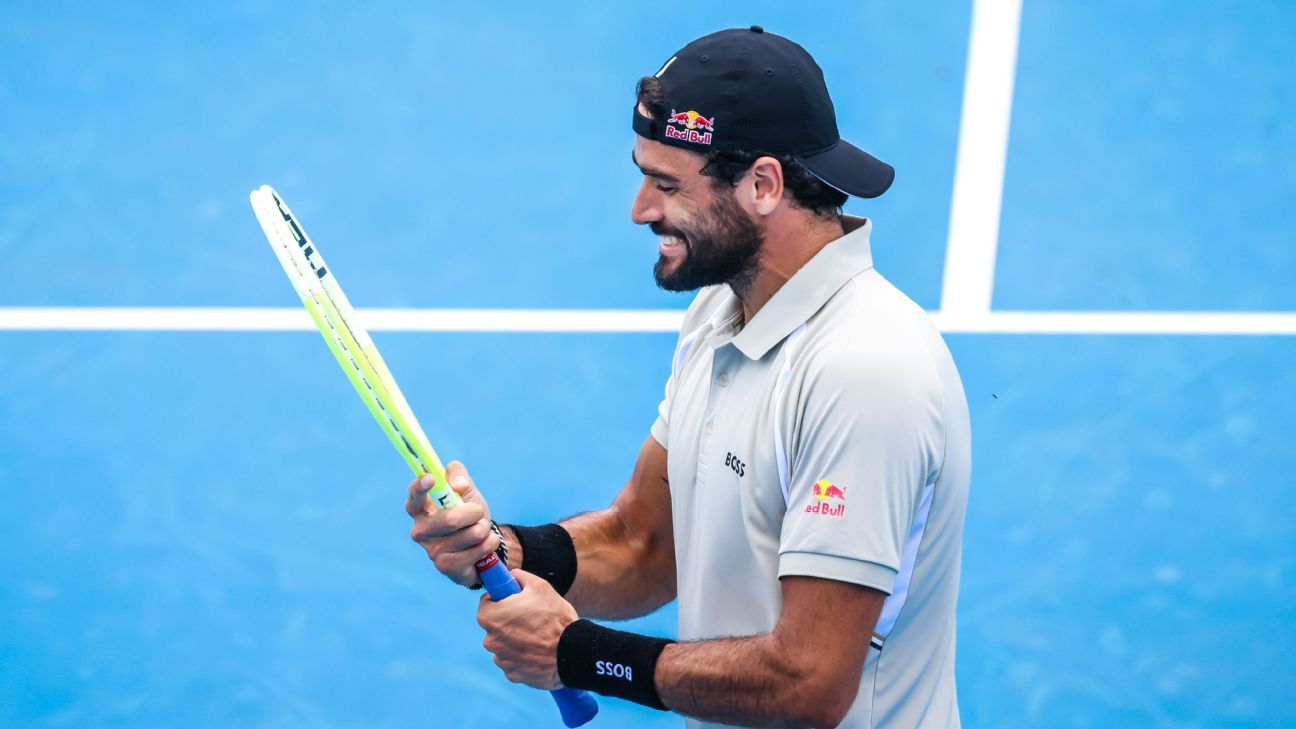
In the sweltering anticipation of Melbourne Park, Alex de Minaur arrives at the Australian Open with his draw suddenly less foreboding. Illness has forced Matteo Berrettini out of their first-round matchup, replacing the Italian’s power with the steadier presence of lucky loser Mackenzie McDonald. This shift arrives just as the world No. 6 seeks to harness the home crowd’s energy for a deep run on these medium-paced hard courts.
Berrettini, the former Wimbledon finalist, cut short his exhibition at Red Bull Bassline after completing one match against Norway’s Nicolai Budkov Kjaer. Retirements followed in his other outings, signaling the illness that now sidelines him for the tournament’s start on Monday. At 30 and ranked world No. 56, he caps a 2025 marred by an oblique injury that knocked him out early in Rome and forced absences from the French Open and US Open.
“I’m really sorry to have to withdraw from the tournament,” Berrettini said. “I have always enjoyed being and playing here and feeling your incredible support. Thank you to the tournament for their fantastic organisation and I hope to see all you again very soon.”
Berrettini’s setbacks test his resolve
The Italian’s withdrawal marks the seventh Grand Slam missed in four years, a pattern that weighs heavily on a player known for booming serves and net approaches. Despite the frustration, Berrettini contributed decisively to Italy’s Davis Cup victory in November, a reminder of his competitive fire amid recurring health battles. His vague health update via the Australian Open’s channels leaves fans hoping for a swift recovery, but for now, it underscores the mental grind of constant comebacks.
On these hard courts, where Berrettini’s heavy topspin forehands and inside-in approaches could have disrupted de Minaur‘s rhythm, the absence eases an immediate tactical burden. The Sydneysider trailed 3-2 in their head-to-head, often stretched by the Italian’s aggressive patterns that demand quick adjustments and deep returns. Instead, de Minaur faces McDonald, whom he has beaten twice, including a 2022 Rotterdam win built on crosscourt backhands and precise down-the-line passing shots.
De Minaur breathes easier in home spotlight
Entering as Australia’s top seed, de Minaur carries national expectations into a draw that still poses challenges. Argentina’s world No. 74 Mariano Navone or Serbia’s 96th-ranked Hamad Medjedovic await in the second round, both favoring baseline exchanges that play to de Minaur’s counterpunching speed. American 29th seed Frances Tiafoe looms as a likely third-round foe, his explosive inside-out forehands testing de Minaur’s 1–2 return patterns on a surface that rewards varied paces.
Further in, grand slam nemesis Alexander Bublik could emerge in the last 16, his serve-slice combinations and unorthodox drop shots forcing on-the-fly defenses like low slices to neutralize low skidding balls. The quarterfinals might bring top-ranked Carlos Alcaraz, a matchup where de Minaur’s flat returns and footwork must exploit any wide serves to avoid being pulled into all-court rallies. With McDonald—a qualifier potentially carrying fatigue from the prelims—the opener allows de Minaur to ease into the tournament’s tempo, conserving energy under the relentless sun.
Hard courts favor de Minaur’s adjusted stride
This reprieve lets de Minaur focus on building confidence through familiar exchanges, like redirecting McDonald’s flatter shots with inside-out forehands to open the court. The crowd’s roar in Rod Laver Arena, once amplified by opener nerves, now amplifies his quickness on these courts where the ball’s low bounce suits his low-stance returns. As the Australian Open unfolds, de Minaur’s path, lightened at the start, positions him to channel home pressure into propulsion, potentially carrying him past early hurdles toward a statement run.