Osaka’s Jellyfish Entrance Draws Becker’s Critique

Naomi Osaka’s bold Australian Open arrival in a flowing green ensemble ignites debate on fame’s pressures, blending spectacle with her gritty first-round win.
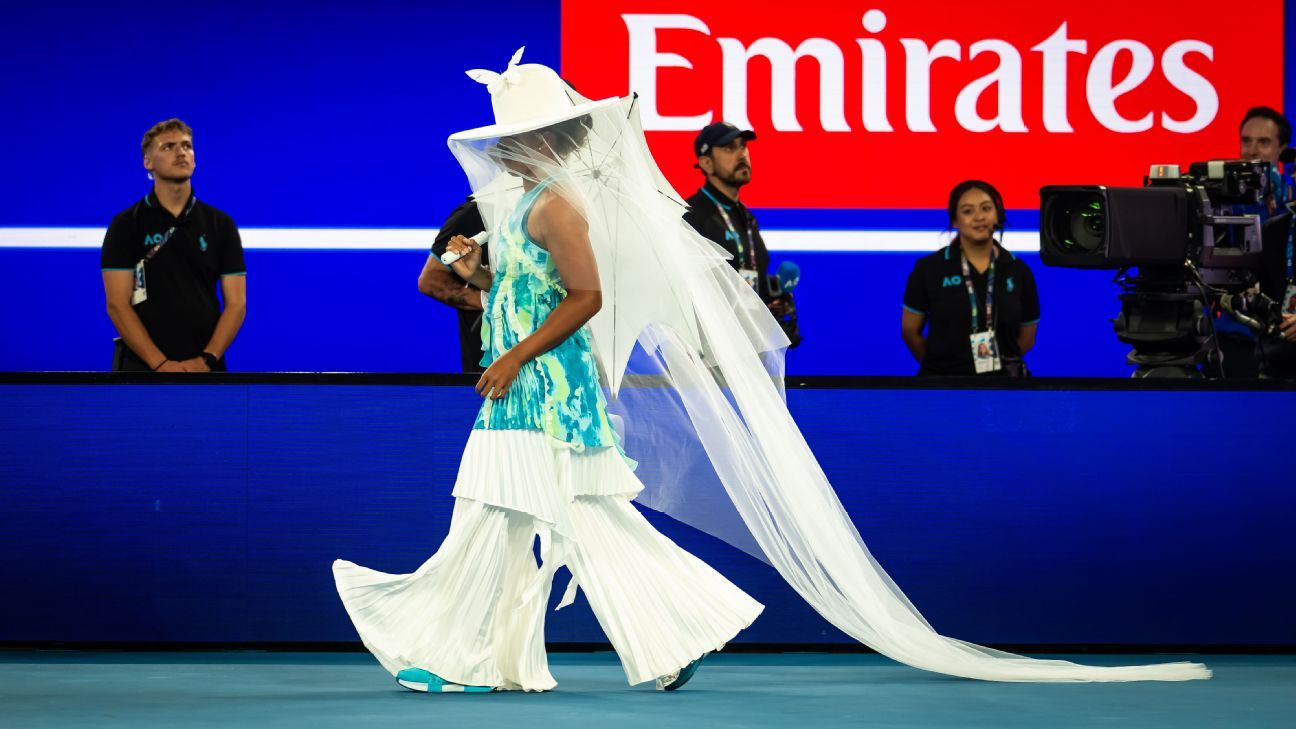
Under Rod Laver Arena’s evening glow, Naomi Osaka emerged for her Australian Open opener like a vision from the deep, her jellyfish-inspired green and white outfit trailing with veil, hat, and parasol. The ensemble turned the Tuesday night first-round match into an instant spectacle, amplifying the four-time Grand Slam champion’s return after maternity leave. On these Plexicushion hard courts, where balls skid and power reigns, the flair set the tone for a comeback laced with personal expression and professional stakes.
“These are, of course, images for the media. The way she entered the court is already iconic. No other player has dared to wear such an outfit. But there is also a contradiction: on the one hand, she doesn’t want to be under so much pressure, she doesn’t want to be in the public eye and in the media so much -- and then she comes onto centre court in an outfit like that. Of course, that puts her back in the public spotlight. I would point out that she also needed a mental break a few years ago. For me, it’s generally important that the focus here is on the sport.”
Boris Becker, the former world No. 1 now analyzing for TNT Sports, voiced his reservations about the display’s mixed signals. He noted how it clashes with her past retreats from scrutiny, recalling the 2021 French Open storm when she skipped press conferences, withdrew after one round, and played just three more events that year for mental health reasons. Yet in Melbourne’s humid air, Osaka channeled that energy into a 6-3, 3-6, 6-4 grind against Antonia Ruzic, a 19-year-old Croatian qualifier whose flat shots tested her early movement.
Becker questions spotlight’s double edge
Down a break in the final set, Osaka reset with heavy topspin forehands that pushed Ruzic deep, opening angles for crosscourt winners on the true-bouncing surface. The crowd’s murmurs built to cheers as she clawed back, employing a 1–2 pattern from the baseline to neutralize aggression and conserve energy for potential deeper runs. Becker’s point lingers: this bold visibility risks reigniting the pressures she once fled, especially as the draw tightens with advances like Aryna Sabalenka, Coco Gauff march on at Australian Open and Madison Keys recovers to reach second round at Australian Open.
Osaka’s history adds weight to the critique; the Australian Open’s fast pace suits her penetrating groundstrokes, but sustaining focus amid external noise demands balance. She varied her backhand slice to disrupt rhythm, lifting the ball high in the Melbourne breeze to force errors from the qualifier’s defense. As rankings climb beckons—a deep run could boost her 50 spots—the entrance’s joy must fuel tactical resolve without overwhelming it.
Osaka channels court alter-ego
Post-match, she unpacked the persona shift that powers her game. “For me, I feel like when I step on the court, I’m not the me that you’re talking to right now,” she said. “I would never yell ‘C’mon’ that loud in a normal setting. I almost feel like I’m a Barbie that dresses up and goes on the court and does something. When I come back in the locker room is when I’m like my true, quiet Naomi.”
This on-court transformation turned the tide against Ruzic, where inside-out forehands exploited openings and down-the-line passes sealed key points. Pressed on the outfit’s added pressure, Osaka dismissed it with humor: “I realise I’m a little strange because I don’t really think I care. I just feel like I want to do things that create joy and happiness. Obviously, I really love fashion. That makes me excited to wake up and do the whole walk-on or whatever. It just creates a little bit more joy in that whole match preparation. When I was playing today, I just told myself, ‘Keep your head on the path. If she beats you, then that’s unfortunate. But, hey, at least you’re trending on Twitter’.” The light touch masks deeper adjustments, like using underspin returns to counter flat hitting on these courts that reward precision over raw force.
Her evolution shows in patterned play: less all-out power, more varied spins to handle qualifiers’ unpredictability, preserving stamina for clashes with seeds. The Australian Open’s early rounds test this blend, where crowd energy surges with each rally, pulling her between quiet introspection and performative fire. As she eyes the third round, that duality could propel her past rising threats, turning fashion’s spark into on-court dominance.
Sabalenka envies the creative flair
World No. 1 Aryna Sabalenka advanced steadily, her straight-sets wins echoing the power baseline game Osaka refines. She praised the ensemble’s authenticity, linking it to Japanese culture and personal vibe. “I think yesterday, that was a perfect fit of her personality, her culture, a lot of things,” Sabalenka said. “That was pretty cool. I wish Nike would let me do this kind of stuff. I was fantasising, trying to work it out, but not good enough yet. But I’ll come up with something cool next year, for sure.”
This peer nod highlights a tour where expression intersects with strategy, especially on hard courts that amplify bold strokes. Osaka’s approach—fashion as preparation ritual—sets her apart, potentially drawing envy and inspiration as the draw unfolds. With Sabalenka looming in later stages, matchups will hinge on who adapts faster: Osaka’s topspin depth against the world No. 1’s flat bombs, or her slice to disrupt service games. The Australian Open’s narrative builds here, Osaka’s resurgence weaving joy and grit into a path that redefines her legacy amid the cheers.