Australian Open Champions Through the Decades

As the 2026 Australian Open heats up in Melbourne, the hard courts echo with triumphs that blend raw power, cunning tactics, and unbreakable wills from Jannik Sinner’s recent reign to the golden eras of Djokovic and Serena Williams.
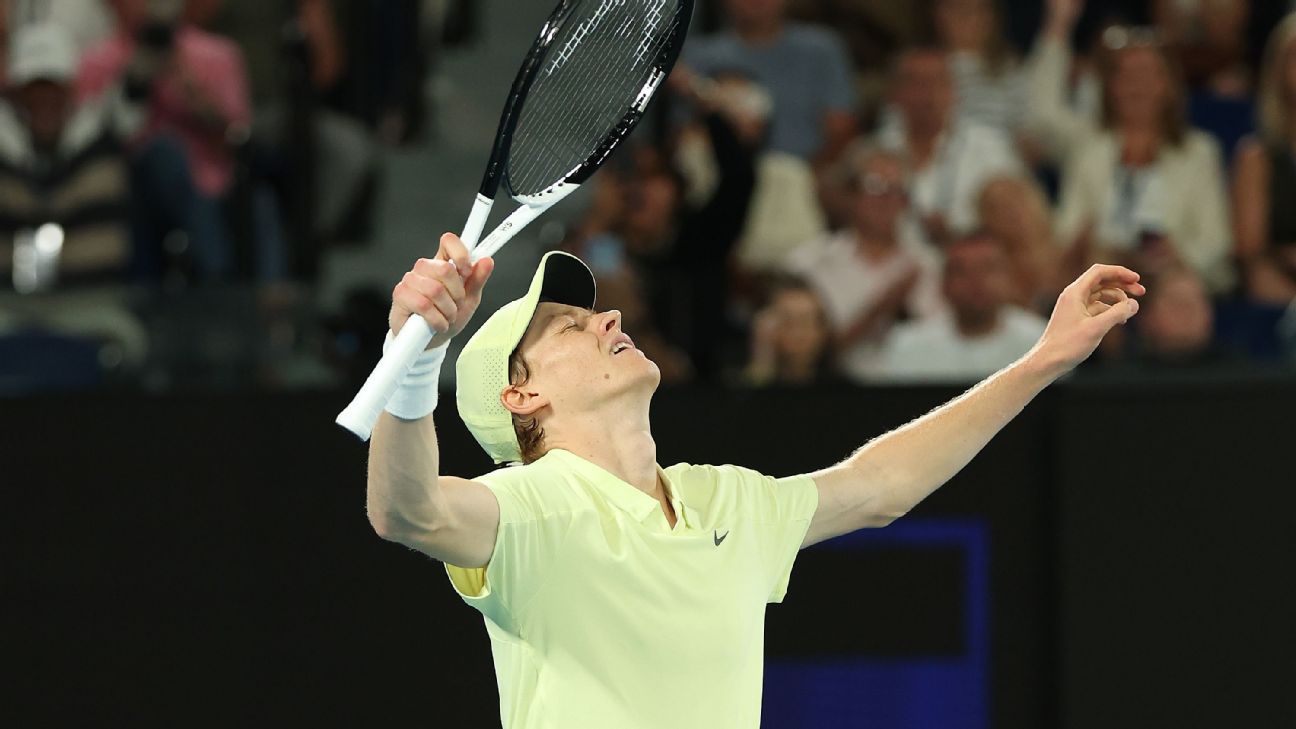
The Australian Open winners list reads like a chronicle of tennis evolution, where Melbourne’s relentless sun has baked in legends from every corner of the sport. Jannik Sinner’s back-to-back titles in 2024 and 2025 mark him as the latest force, his straight-sets mastery over Alexander Zverev in the 2025 final sealing a third Grand Slam amid the roar of Rod Laver Arena. Now, with the 2026 edition underway from January 18 through February 1, a fresh slate awaits, but the shadows of past champions—Novak Djokovic’s 10 Open-era men’s crowns and Serena Williams’s seven on the women’s side—loom large, testing every baseline duel and net rush.
Mental edges sharpen in the heat
Djokovic turned the Australian Open into his fortress, his 10 titles a masterclass in psychological dominance that stretched from the 2008 breakthrough against Jo-Wilfried Tsonga to the 2023 defense over Stefanos Tsitsipas. He absorbed the isolation of pandemic-empty stands in 2021, outlasting Daniil Medvedev in a final where heavy topspin backhands looped deep, dictating endless rallies until exhaustion claimed his rival. That unyielding mindset, blending drop-shot feints with crosscourt lasers, silenced doubts even at 35, his three-peat underscoring how mental cracks only show under prolonged fire.
Rafael Nadal’s 2009 upset of Roger Federer shifted the men’s power balance, his topspin forehand grinding out points in the sweltering conditions, a tactic that peaked in his 2022 win at age 35 after injuries tested his resolve. Federer brought six titles with elegant one-handed backhands slicing inside-in, his 2017 and 2018 runs blending aggression and finesse, though the toll of perfectionism surfaced in five-set marathons. These Big Three eras defined resilience, where crowd energy at Melbourne Park amplified every break point, turning pressure into propulsion.
On the women’s side, Serena Williams‘s seven victories set an intensity benchmark, her serve-volley bursts overwhelming foes from the 2003 sibling clash to the 2017 escape against Angelique Kerber. Madison Keys shattered her own drought in 2025, her flat groundstrokes piercing Aryna Sabalenka‘s defenses in the final for a maiden Grand Slam, the victory’s emotional release echoing through the stands. Sabalenka’s prior back-to-back crowns in 2023 and 2024 relied on thunderous serves, but that loss highlighted how mental lapses in tiebreaks can unravel even the mightiest games.
Ashleigh Barty’s 2022 home triumph mixed slice backhands with tactical variety, her quick retirement revealing the exhaustion of sustaining peak focus under national gaze. Naomi Osaka’s 2019 and 2021 wins showcased serve dominance, her composed exterior hiding the introvert’s struggle with arena spotlights. Victoria Azarenka’s 2012-2013 doubles featured precise down-the-line backhands, while earlier, Steffi Graf’s 1988-1990 streak weaponized inside-in forehands, her Golden Slam year a pinnacle of aggressive poise amid swirling winds.
Tactics adapt to plexicushion bite
Sinner‘s inside-out forehands thrive on Melbourne’s hard courts, where the plexicushion grips the ball just enough for heavy topspin to skid low and force errors. In 2025, his 1–2 punch—serve followed by a crosscourt setup—disrupted Zverev‘s returns, varying pace to climb toward world No. 1 security. Defending now, he layers in underspin slices to counter evolving defenses, shortening points against the field’s rising net approaches.
Keys’s 2025 breakthrough exploited the surface’s late-match slowdown, her clean backhand down-the-lines redirecting Sabalenka’s power into unforced faults. This year, she eyes more volleys to disrupt servers, adapting to the heat that quickens bounces early and tempers them as shadows lengthen. Djokovic‘s elastic returns turned defense into offense, his 2011-2013 and 2015-2016 streaks using drop shots to pull rivals forward, decoding matchups that younger players like Sinner now study frame by frame.
Historical shifts reveal tactical ingenuity: the 1980s serve-volley era saw Stefan Edberg’s 1985 and 1987 upsets over Ivan Lendl’s baselines, precise serves exploiting faster setups. Pete Sampras’s 1994 and 1997 titles boomed with clutch aces, while Andre Agassi’s 2000-2001 and 2003 wins blended all-court finesse, his inside-in backhands piercing true-pace rallies. Stan Wawrinka’s 2014 outlier relied on one-two patterns amid Big Three shadows, his heavy forehands carving openings in extended exchanges.
Women’s tactics mirror this progression, with Sabalenka’s explosive groundstrokes suiting the court’s speed until Keys’s flatter angles intervened. Li Na’s 2014 victory featured sliding approaches, Caroline Wozniacki’s 2018 endurance grinding through marathons. Monica Seles’s 1991-1993 and 1996 aggression redefined double-handed power, stabbing forehands pressuring baselines before her path shifted. Martina Navratilova’s 1983 and 1985 serve-volleys disrupted Chris Evert-Lloyd’s 1982 and 1984 precision, lefty spin adding unpredictability.
Eras unfold from grass to modern hard
Pre-Open era men’s dominance came via all-court mastery, Rod Laver’s 1960, 1962, and 1969 calendar Grand Slam blending versatility on transitioning grass. Roy Emerson’s 1961-1965 streak ruled with efficient volleys, the isolation amplifying far-from-home stakes. Post-1968, Jimmy Connors’s 1974 flat shots injected confidence during the hard-court shift, John Newcombe’s 1975 defense mixing experience with fire, Ken Rosewall’s 1971-1972 wins at 37 defying age through tactical depth.
The 1977 split—Vitas Gerulaitis in December, Roscoe Tanner in January—captured transitional flux, Mark Edmondson’s 1976 shock upending favorites. Guillermo Vilas’s 1978-1979 topspin arcs suited emerging baselines, Brian Teacher’s 1980 upset flipping scripts. Johan Kriek’s 1981-1982 on faster courts, Mats Wilander’s 1983-1984 and 1988 mixing spins, Lendl’s 1989-1990 return depth, Boris Becker’s 1991 and 1996 volleys, Jim Courier’s 1992-1993 steadiness, Yevgeny Kafelnikov’s 1999, Petr Korda’s 1998—each adapted to venue evolutions from grass to Rebound Ace.
Marat Safin’s 2005 power-finesse blend, Thomas Johansson’s 2002, all wove into the narrative before Federer’s 2004-2006 three-peat with low slices drawing errors. Wars paused action in 1916-1918 and 1941-1945, but resumptions brought grit: Adrian Quist’s 1936-1940 and 1948 defenses, Dinny Pails’s 1947, John Bromwich’s 1939 and 1946, Donald Budge’s 1938, Vivian McGrath’s 1937, Jack Crawford’s 1931-1935 run, Fred Perry’s 1934, Gar Moon’s 1930, John Gregory’s 1929, Jean Borotra’s 1928, Gerald Patterson’s 1927, John Hawkes’s 1926, James Anderson’s 1924-1925, Pat O’Hara Wood’s 1914 and 1920-1923, Rhys Gemmell’s 1921, A.R.F. Kingscote’s 1919, Francis Lowe’s 1915, E.F. Parker’s 1913, Cecil Parke’s 1912, Norman Brookes’s 1911, Rodney Heath’s 1905 and 1910, Tony Wilding’s 1906 and 1909, Fred Alexander’s 1908, Horace Rice’s 1907.
Women’s lineage starts with Daphne Akhurst’s 1925-1926 and 1928-1930 quintet enduring long rallies, Esna Boyd’s 1927, Sylvia Lance’s 1924, Margaret Molesworth’s 1922-1923. Coral Buttsworth’s 1931-1932, Joan Hartigan’s 1934-1936, Dorothy Round’s 1935, Nancye Wynne’s 1937, Emily Westacott’s 1939, Dorothy Bundy’s 1938, Nancye Wynne Bolton’s 1940 and 1946-1948, Doris Hart’s 1949, A. Louise Brough’s 1950, Thelma Long’s 1952 and 1954, Maureen Connolly’s 1953, Beryl Penrose’s 1955, Shirley Fry’s 1957, Angela Mortimer’s 1958, Mary Carter Reitano’s 1959.
Margaret Smith’s 1960-1965 and 1969-1973 haul—11 total—adapted across surfaces, outlasting Billie Jean King’s 1968, Nancy Richey’s 1967, Virginia Wade’s 1972. Evonne Goolagong’s 1974-1976 and 1977 December fluid strokes navigated cultural layers, Kerry Reid’s 1977 January, Barbara Jordan’s 1979, Chris O’Neil’s 1978. Hana Mandlikova’s 1980 and 1987, Mary Pierce’s 1995, Martina Hingis’s 1997-1999, Lindsay Davenport’s 2000, Jennifer Capriati’s 2001-2002, Justine Henin-Hardenne’s 2004, Amelie Mauresmo’s 2006, Maria Sharapova’s 2008, Kim Clijsters’s 2011, Sofia Kenin’s 2020 surprise—all reflecting spins, angles, and surface speeds that crowned diverse styles.
As day two of 2026 unfolds, these threads connect Sinner’s steady advance and Keys’s steel to deeper histories, where every 1–2 setup or slice approach invites new chapters. The plexicushion, under January’s glare, amplifies doubts and drives, promising momentum swings in the opening rounds. For deeper dives into the action, ESPN’s tennis coverage delivers breaking news on upsets, sharp analysis of storylines, up-to-date rankings, and complete Grand Slam title winners history.