ATP’s Safeguarding Programme Fortifies 2026 Tour

As players shake off the off-season rust and eye the 2026 calendar’s grueling sprints, the ATP introduces a Safeguarding Programme to guard against the off-court threats that can unravel a season’s focus.
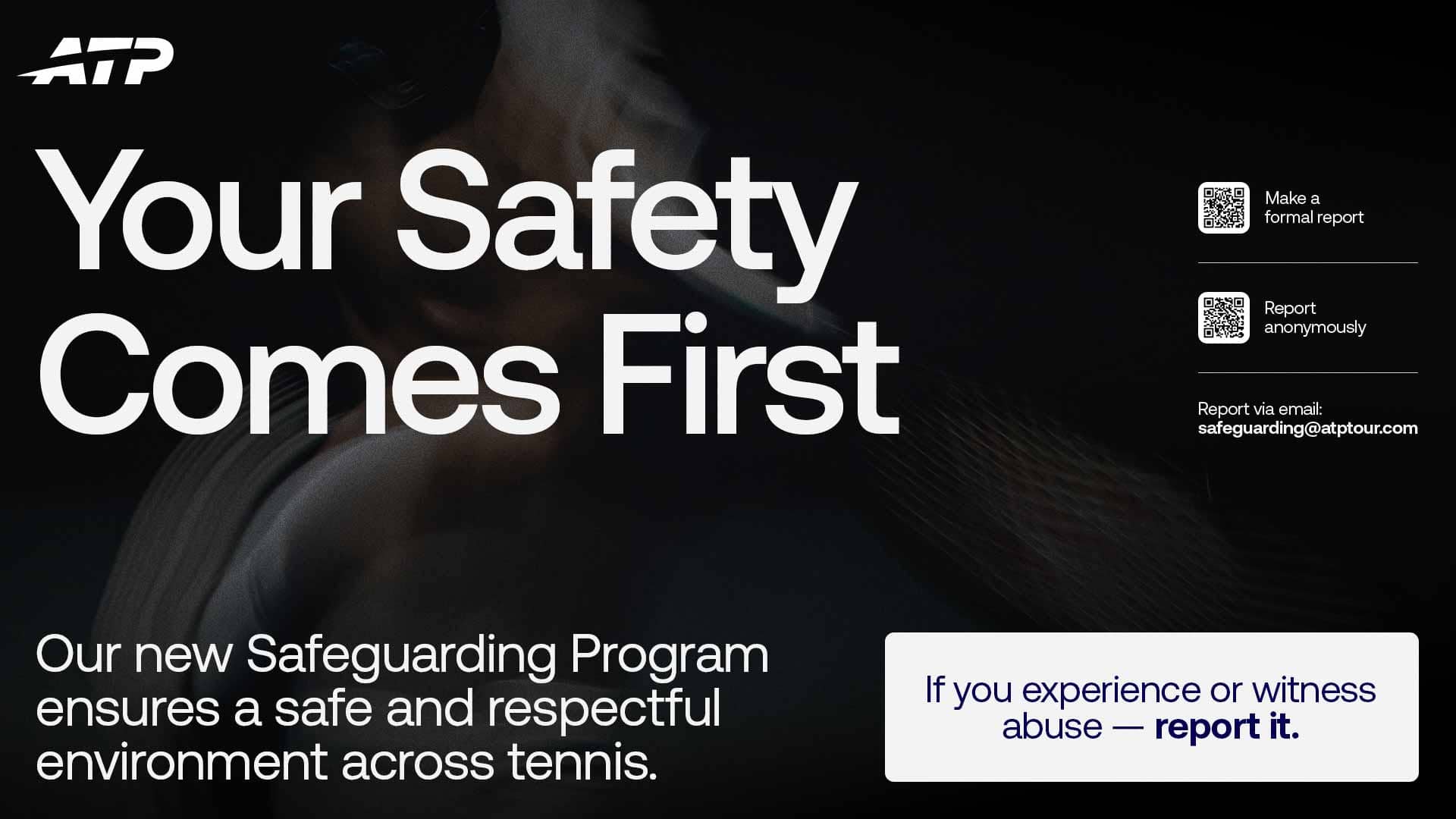
In the quiet hum of winter training sessions, where rackets cut through crisp air and baselines echo with early drills, the ATP Tour reveals its Safeguarding Programme, set to launch in January 2026. This initiative blankets the ATP Tour and Challenger Tour events worldwide, forging a shield against abuse, harassment, and misconduct that often lurks beyond the lines. Rooted in trauma-informed principles and global best practices, it emerges from the ATP’s Independent Safeguarding Report, committing to uniform protections that let players channel energy into their game without unseen drags.
“Everyone involved in our events — from players and their teams to staff and volunteers — deserves to feel safe, respected, and valued. This programme helps make that a reality. By introducing clear protections against abuse, we’re strengthening the culture of tennis and aligning our sport with global standards of governance and care.”
Eno Polo, ATP CEO, positions this as vital for a sport where mental clarity powers every inside-out forehand. The programme structures around three pillars—Policies & Procedures, Prevention, and Response—to embed safety into tournament rhythms, from the hard-court bursts of the Australian Open to the clay-court endurance tests in Monte Carlo.
Building resilience before the first serve
A comprehensive code of conduct anchors the policies, targeting harassment, bullying, domestic violence, and inappropriate behavior with zero tolerance. Training sessions roll out through 2026 for ATP staff, players, support teams, and tournament personnel, instilling these standards like the repetition that hones a one–two serve-return pattern. At every event, a Designated Safeguarding Officer stands ready, ensuring quick interventions that keep the focus on tactical shifts rather than disruptions.
Prevention emphasizes education to spot risks early, much like reading an opponent’s setup for a crosscourt lob. Confidential and anonymous reporting channels provide outlets, allowing issues to surface without derailing a player’s preparation for a down-the-line winner. This groundwork promises to steady the psychological load, especially during the tour’s relentless travel from Doha’s humidity to Paris’s indoor chill.
Navigating shadows in the long haul
Response mechanisms include independent oversight via a new Safeguarding Advisory Panel and an external appeals process, fostering trust in fair handling. Enhanced protections against online abuse deploy AI moderation alongside human review, countering the digital noise that can amplify after a net-cord loss or a tight tiebreak. These layers ensure that the season’s momentum—from Wimbledon’s grass slides to the US Open’s night-session intensity—builds on integrity rather than erosion.
Andrew Azzopardi, ATP Director of Safeguarding, underscores the trauma-informed foundation. “Our approach is grounded in trauma-informed principles, supported by clear reporting channels, consistent procedures, and independent oversight. We want every player, staff member, and volunteer to feel safe, supported, and confident in the processes we’re putting in place to protect them.” His vision aligns the tour’s global framework with wider sports standards, turning safety into a shared rhythm.
Collaboration extends to the WTA, ITF, and Grand Slams, weaving unified safeguards across tennis. As 2026 unfolds, players stepping into Challenger qualifiers or Masters finals will carry this backing, allowing their heavy topspin rallies and slicing approaches to define the narrative. The programme doesn’t just protect; it sharpens the edge, ensuring the sport’s psychological battles stay on court, fueling deeper runs and bolder plays.