Wimbledon pressure tests fragile title hopes

Shock exits at Roland Garros and limited grass preparation leave even the strongest seeds navigating doubt and heat as the second week looms at SW19.
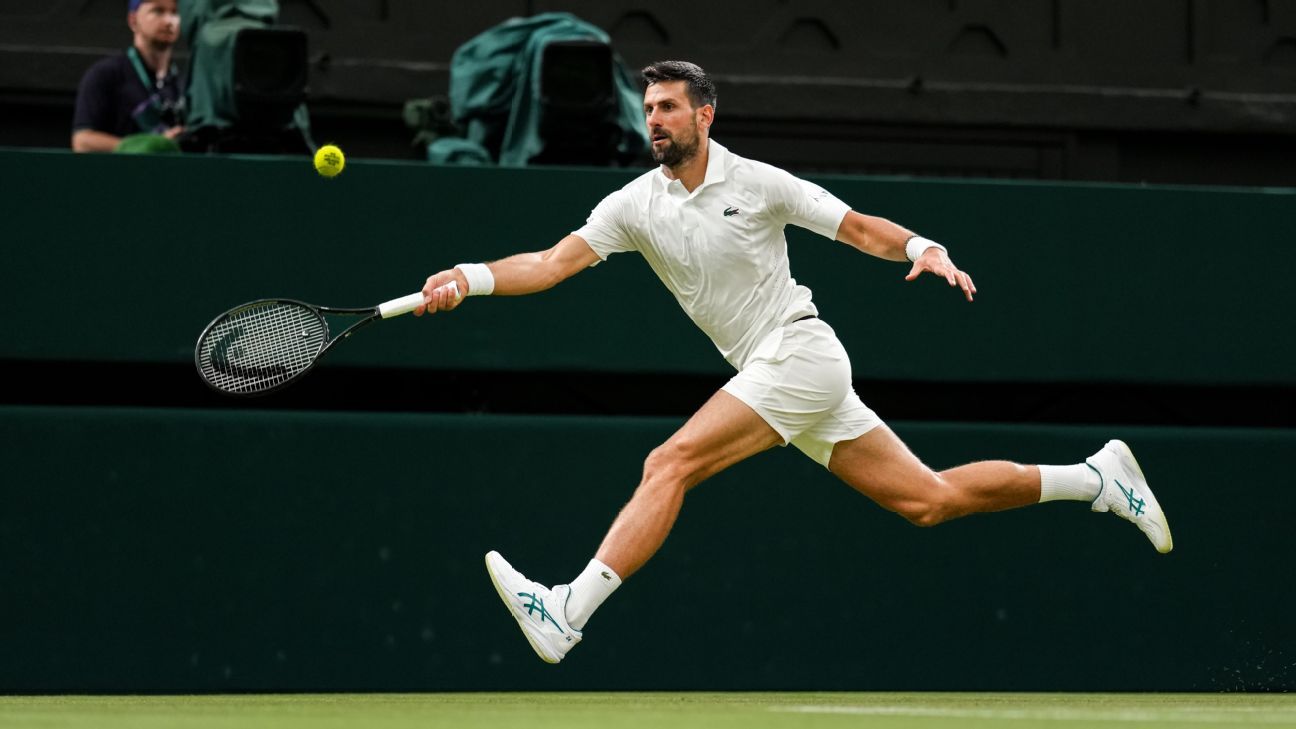
Entering the second week at Wimbledon the sense of vulnerability among the top seeds feels heavier than the unusually warm London air. Last year’s champion arrived without grass-court matches and already carrying the memory of a dramatic collapse in Paris. Rafael Nadal once made the French Open feel like a formality, yet the current draw offers no such certainty.
Season scars shape early-round nerves
Novak Djokovic (4a27bb1c-2422-55c3-208b-9e9d8c1f30af) and Serena once anchored expectations here alongside Venus Williams, but the field now moves with visible caution. Ben Shelton and Elina Svitolina have already exited, their departures underscoring how quickly momentum can shift on grass. The psychological residue from Roland Garros lingers for several contenders who let leads slip in the heat.
That pattern of late-match fade has opponents circling with renewed belief whenever temperatures climb. Jannik Sinner endured inconclusive medical checks after cramping against Juan Manuel Cerundolo in Paris. The five-set opener at Wimbledon revealed lingering questions about recovery rhythm.
Without a warm-up event the Italian leaned on internal confidence rather than recent results, yet every service game carried an extra layer of calculation. Carlos Alcaraz sits out through injury, leaving Alexander Zverev as the only recent French Open champion still standing. Zverev has never advanced past the fourth round here, so the absence of a proven grass specialist heightens the sense that this title chase will reward whoever manages mental load best.
Grass adjustments challenge defending champions
Novak Djokovic has played just four events all year and arrives at 39 after a third-round loss to Joao Fonseca in Paris. Djokovic needed five sets to dispatch Wu Yibing before easing past Stefanos Tsitsipas. The Serbian spoke openly about planning to peak on grass where his movement has always been superior.
That long-term schedule focus now collides with the reality of limited match play and advancing age. Aryna Sabalenka returned to her former psychologist after blowing a set and 4-1, 30-0 lead to Diana Shnaider in Paris. At Wimbledon she has saved set points against McCartney Kessler and still seeks a first final.
The pressure of chasing that milestone while rebuilding trust in her own resilience colors every tight service game. Iga Swiatek also exited Paris early, losing to Marta Kostyuk. She has spoken about slowing her decision-making after too many rushed losses this season.
A straighter second-round win over Karolina Pliskova offered modest reassurance following a nervy opener against Taylor Townsend. Coco Gauff continues to battle serve and forehand consistency after a third-round Paris exit and a Berlin warmup loss. She fought through against Solana Sierra but knows deeper runs will require cleaner patterns under pressure.
Depth keeps every match competitive
Madison Keys cautions against assuming an open draw automatically favors anyone, noting that recent champions have often navigated stacked fields rather than weak ones. The psychological thread running through both draws is the tension between past dominance and present uncertainty. Players who once treated early rounds as routine now weigh every tactical adjustment against the memory of recent collapses.
With temperatures forecast to remain high, the ability to reset between points and protect energy reserves may decide who advances when the second week begins. Inside-out forehands must flatten into crosscourt targets while slice backhands keep the ball low on the faster surface. Those who treat each match as an isolated contest rather than another chapter in a draining season stand to gain the clearest edge on the fast grass. The chasing pack senses openings yet knows that every opponent arrives with improved preparation and sharper focus on the low-bouncing conditions.