Andreeva’s Fire Ignites in Desert Defeat

In a charged Indian Wells night, Mirra Andreeva’s title defense crumbles against Katerina Siniakova, her frustration spilling over racket smashes and sharp words with the crowd.
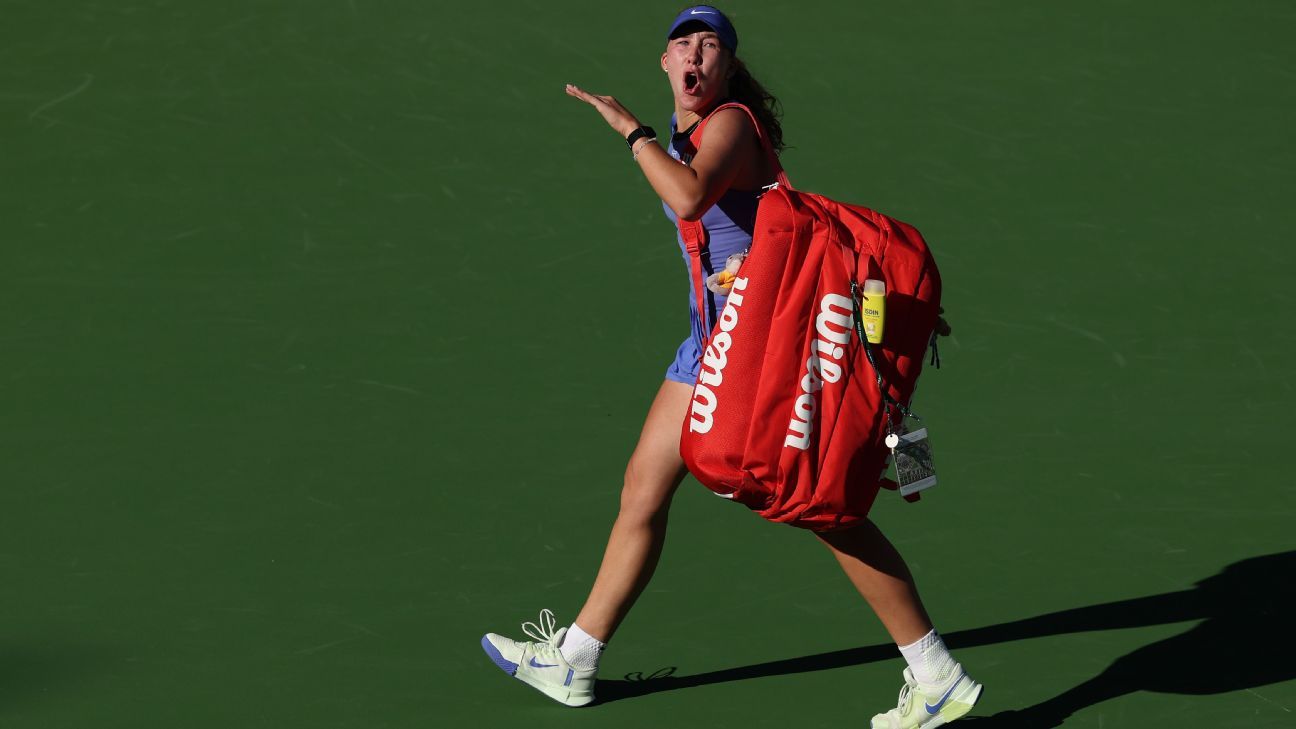
Under the Indian Wells floodlights, Mirra Andreeva’s grip on her defending champion status slipped in a gritty third-round battle. The 4–6, 6–7(5), 6–3 loss to unseeded Katerina Siniakova turned the stadium into a cauldron of tension, where the young Russian’s powerful groundstrokes met the Czech’s sly deflections. Andreeva started strong, ripping inside-out forehands to dictate points, but Siniakova’s low slices skidded across the hard court, forcing hurried replies that edged wide.
“I’m not really proud of how I managed it. I’m not really proud of how I handled it in the end,” Andreeva said in a news conference. “Those are the things that I really need to work on soon. I don’t know. Not in the future but whenever I get the chance.”
Frustration mounts amid tactical shifts
Siniakova’s underspin backhands disrupted Andreeva’s rhythm early, pulling her forward into awkward stretches that sapped her heavy topspin’s bite. The Russian countered with crosscourt passes, but errors piled up as the Czech varied her returns, mixing flat pace with drop shots to keep the baseline war unpredictable. By the second set, Andreeva’s one–two punch faltered, her serve-volley attempts met by sharp down-the-line returns that leveled the score.
The tiebreaker tipping point came after a missed inside-in forehand; Andreeva tossed her racket, the code violation drawing a stern warning from the umpire. Crowd murmurs swelled as her gestures sharpened, the desert air thick with the weight of last year’s triumph now hanging like a shadow. Siniakova held firm, her doubles-honed net play snatching key points in extended rallies.
Slices unravel the champion’s power
Andreeva’s footwork, fluid in prior rounds, grew tentative against Siniakova’s redirection, the hard court’s grip amplifying every skid and bounce. The Czech won 60 percent of second-serve points by dipping low balls that jammed the Russian’s setup, turning potential winners into unforced errors past 40 for the match. This upset dents Andreeva’s points haul from her 2025 run, tightening her lead in the year-end race while boosting Siniakova’s top-40 push.
The third set saw Andreeva claw back with aggressive 1–2 patterns, breaking serve twice on heavy forehand winners, but Siniakova’s resilience shone through, her lobs floating over rushed approaches to seal the decider. The crowd, once roaring for the teenager’s flair, now watched a storm brew in her eyes. Tactical adjustments like more slice variation could arm Andreeva against such foes on faster surfaces ahead.
Outburst echoes beyond the baseline
Match point arrived with a Siniakova crosscourt backhand; Andreeva smashed her racket again, the strings snapping against the court as her roar pierced the applause. After a quick net handshake, she stormed toward the tunnel, gesturing and shouting at fans who had cheered her path to glory a year prior. That raw exchange laid bare the isolation of defeat in a tournament demanding unflinching poise.
Looking to Miami and the clay swing, Andreeva’s camp faces the task of channeling this fire into focus, where emotional edges might sharpen her edge over rivals. Siniakova advances, her crafty game a blueprint for underdogs navigating power-packed draws. For the young defender, this desert night could temper the steel needed to reclaim her stride.