Alex Eala steps into Flushing Meadows with sharpened tools

After a first title and a career-high ranking the Filipina faces the test of sustaining her patterns across seven matches on quicker courts where opponents arrive with clearer plans.
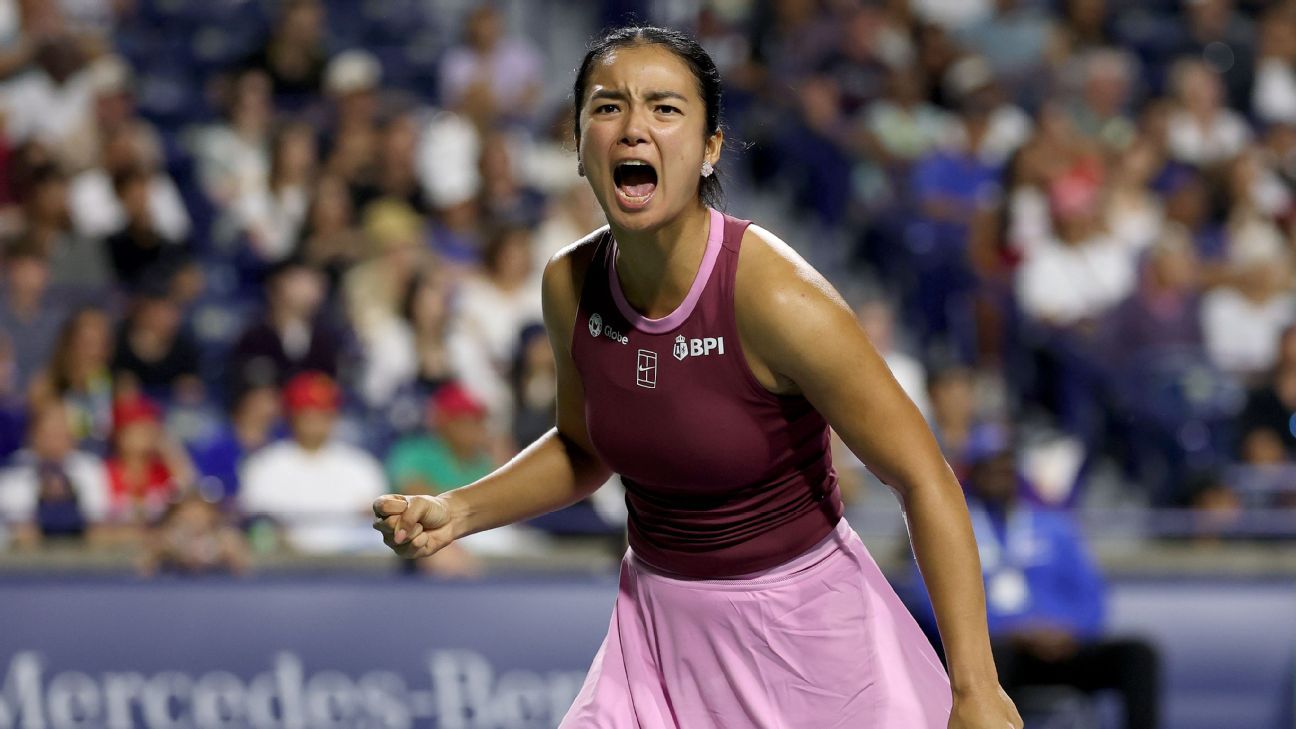
Alex Eala steps into Flushing Meadows carrying the quiet tension that follows any player whose results have suddenly accelerated. The past month delivered a first title and a career-high ranking yet those gains now sit beside the knowledge that opponents arrive with fresh film and clearer intentions.
Refining forehand depth on faster surfaces
She has grown more selective with her forehand since Wimbledon using heavy topspin crosscourt to pin opponents behind the baseline before switching inside-out down the line. The US Open courts play quicker than those in Toronto rewarding players who can flatten the ball at the right moment without losing margin. Eala now waits one extra ball in many exchanges letting the surface speed do some of the work before she commits to the inside-in angle.
Her backhand remains the primary weapon for redirecting pace but she has added more slice to change height and tempo against aggressive baseliners. That variation helps her stay in points when opponents try to dictate with heavy groundstrokes. Her return game continues to pressure second serves often forcing errors before opponents settle into rhythm.
The left-handed serve now features more variety in placement and spin allowing her to set up one-two patterns that open the court for her stronger wing. Early exits in Canada gave her extra recovery time before the seven-match grind ahead.
Lessons from Wimbledon losses shape hard court approach
capture her first WTA Tour title, at the Mubadala DC Open in Washington lifted her to No. 20 and altered her draw access for the rest of the season. A quarterfinal finish here would add 430 points while a semifinal would bring 780 enough to move her inside the top 15 provided players directly ahead exit earlier than expected. The champion earns 2,000 points yet even a round-of-16 result of 240 points would solidify her position as a consistent top 20 player.
She has already played 54 singles matches in 2026 with a 36-18 record and a 22-9 mark on hard courts. Those numbers reflect the physical demands that now require smarter scheduling between the remaining hard court events and the Asian swing. Her return game continues to pressure second serves often forcing errors before opponents settle into rhythm.
Iga Swiatek tested Eala’s patterns at Wimbledon and exposed areas where decision-making under pressure still needs tightening. Jasmine Paolini later disrupted those same patterns with varied slice and court positioning offering a blueprint opponents may try to copy on the quicker New York surface. Eala has since worked on recognizing those shifts earlier and adjusting her own serve locations to prevent easy returns.
The final against Jessica Pegula showed her ability to recover from a set down winning 4-6 6-4 6-0 after four prior victories in Washington. That resilience matters when facing potential seven-match stretches against higher-ranked players who also rest better between rounds.
“Momentum is a thing, I guess, but it’s not concrete and it doesn’t give you any 100% answers,” Eala said during her Cincinnati Open press conference. “A lot of matches can help with your confidence, but it doesn’t guarantee anything.”
Rest and routine become mental anchors
The early exits in Canada and Ohio now function as unplanned preparation. Extra days allow her to rehearse the one-two combinations and crosscourt backhand pressure that have become signatures while the mind resets before the seven-match test that begins in New York. Higher ranking already brings byes and better draws yet the real shift is psychological fewer qualifying matches mean more energy for the later rounds where the top 10 players wait.
She is also expected to represent the Philippines at the Asian Games after the Singapore Tennis Open and possible events in China and Japan. At 21 she already understands the court remains the same size regardless of ranking or surface. The focus stays on executing the same fundamentals while the draw and points math create new opportunities each round.
“I think at the end of the day, it’s the same lines, it’s the same size ball,” she said at a pre-tournament press conference at the Cincinnati Open. “When you’re on court and you know what you have to do, nothing changes much.” That sentence now serves as the private counterweight to the external noise that grows with every ranking point gained. The biggest question in New York may not be whether she can reach her highest level. It is whether she can sustain it and indeed go higher still against increasingly difficult opponents potentially over seven matches.