Alex Eala Chases Clay Breakthrough After Hard-Court High

Fresh off a hard-court surge that lifted her into the top 30, Alex Eala now confronts clay’s deliberate pace, where last year’s setbacks test her Nadal-forged resolve in a demanding spring slate.
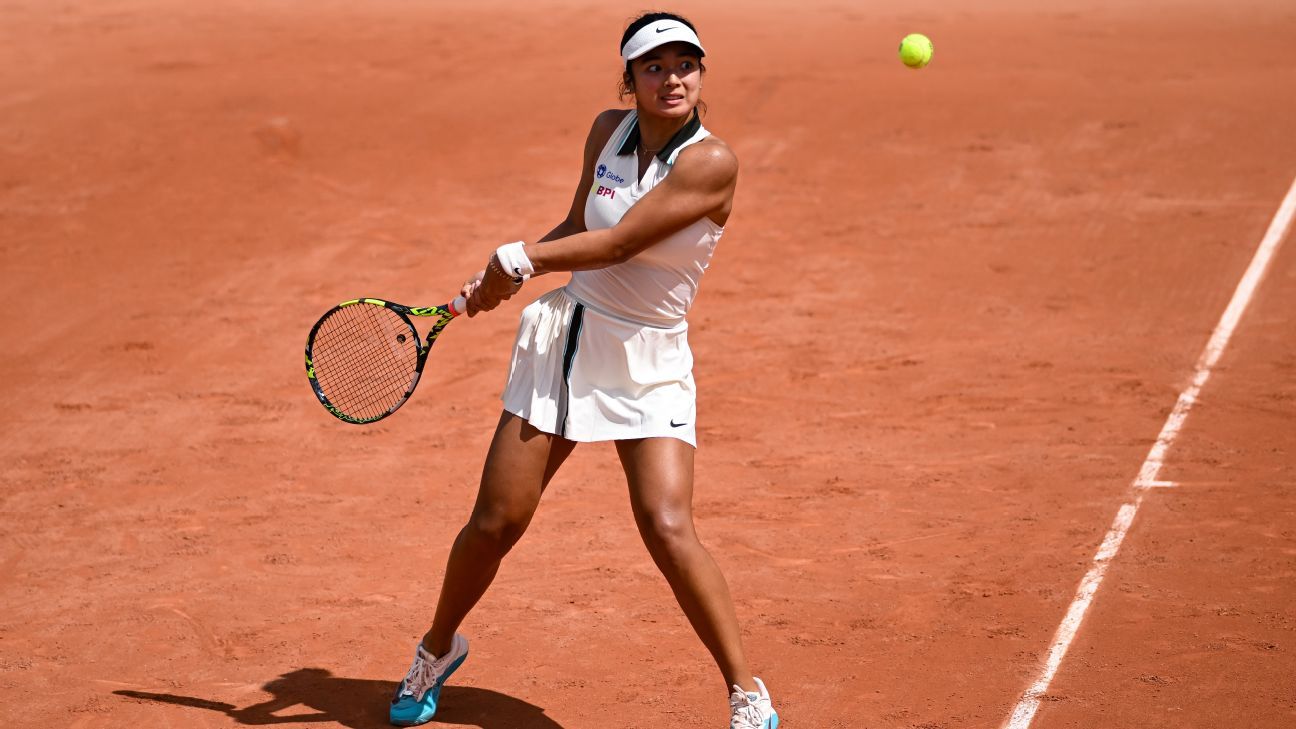
Alex Eala steps into the 2026 clay swing carrying the spark from her hard-court breakout, a quarterfinal run at the Dubai Tennis Championships followed by back-to-back Round of 16 finishes at the BNP Paribas Open and Miami Open. That momentum propelled her to a career-high No. 29 in the WTA rankings, a mark that turned heads across the tour. But with points from her previous Miami semifinal expiring, she finds herself at No. 45—a rankings reset that sharpens focus without dimming her upward arc.
Mindset recalibrates for slower bounces
Clay has long tested Eala’s aggressive baseline game, which flourishes on hard courts’ crisp pace with sharp inside-out forehands and quick crosscourt exchanges. Last season exposed the gaps: a Round of 16 exit at the WTA 125 event in Oeiras, then early defeats in majors like the round of 64 at the Madrid Open, where she fell in a three-set battle against Iga Świątek, trading heavy topspin rallies before a down-the-line backhand ended it. The Italian Open brought a round of 128 loss, and her French Open debut wrapped with a first-round defeat to Emiliana Arango, sealing a 2-4 clay record in 2025 that contrasted sharply with her hard-court dominance.
These results forced a mental pivot, demanding patience in extended rallies where the dirt’s grip slows every shot and rewards sliding footwork over raw power. Eala‘s natural instinct to attack with flat-driven winners now bends toward looping topspin that climbs high off the surface, building points stroke by stroke. The psychological weight lingers in Europe’s sun-baked arenas, where the crowd’s murmurs build with each prolonged exchange, urging her to embrace the surface’s unhurried tempo.
Nadal’s methods sharpen her edge
Back at the Rafael Nadal Academy, Eala dives into sessions that echo the Spaniard’s clay mastery, honing underspin slices to disrupt returns and 1–2 patterns that set up inside-in forehands. This environment, steeped in relentless defense and topspin loops, equips her to translate hard-court speed into clay’s marathon demands. Drills emphasize recovery steps on the red dirt, turning potential frustration into calculated aggression that could extend her rallies beyond last year’s breaking point.
The academy’s rhythm—a steady thud of balls gripped by spin—rebuilds confidence away from tournament lights, where Eala visualizes outlasting opponents in grinding baselines. Her game, once reliant on quick points, now incorporates varied pace to counter the surface’s predictability, fostering a mental toughness that views clay not as a hurdle but a canvas for growth. As she prepares for the Linz Open opener, these tweaks promise a shift from survival to control, with the air in Manacor carrying whispers of deeper European runs.
Spring slate probes her progress
The Linz Open marks Eala’s clay entry, a measured start before the intensity builds at the Porsche Tennis Grand Prix, Mutua Madrid Open, and Italian Open—venues where 2025’s scars still echo. Here, smarter shot selection, like crosscourt probes to open angles or down-the-line passes on overhit returns, will face clay specialists who thrive on attrition. Rankings pressure adds edge, as stacking wins could lift her beyond No. 45, turning the swing into a momentum builder.
Roland Garros looms as the emotional peak, her second chance at the Grand Slam where surface feel and weather variables amplify every slide and recovery. Crowds in Paris will sense the stakes in her heavier groundstrokes and extended points, the clay dust rising with each contest. If Eala channels this preparation into tangible gains—fewer errors in long exchanges, more winners from defense—the phase cements her as an all-surface force, evolving from promising talent to tour mainstay.