Alcaraz spotlights one-point showdown at Australian Open

Under Melbourne’s January glare, a lone rally holds the key to a million-dollar prize, pitting Carlos Alcaraz and top pros against everyday players in a format that boils tennis down to its nerve-testing core.
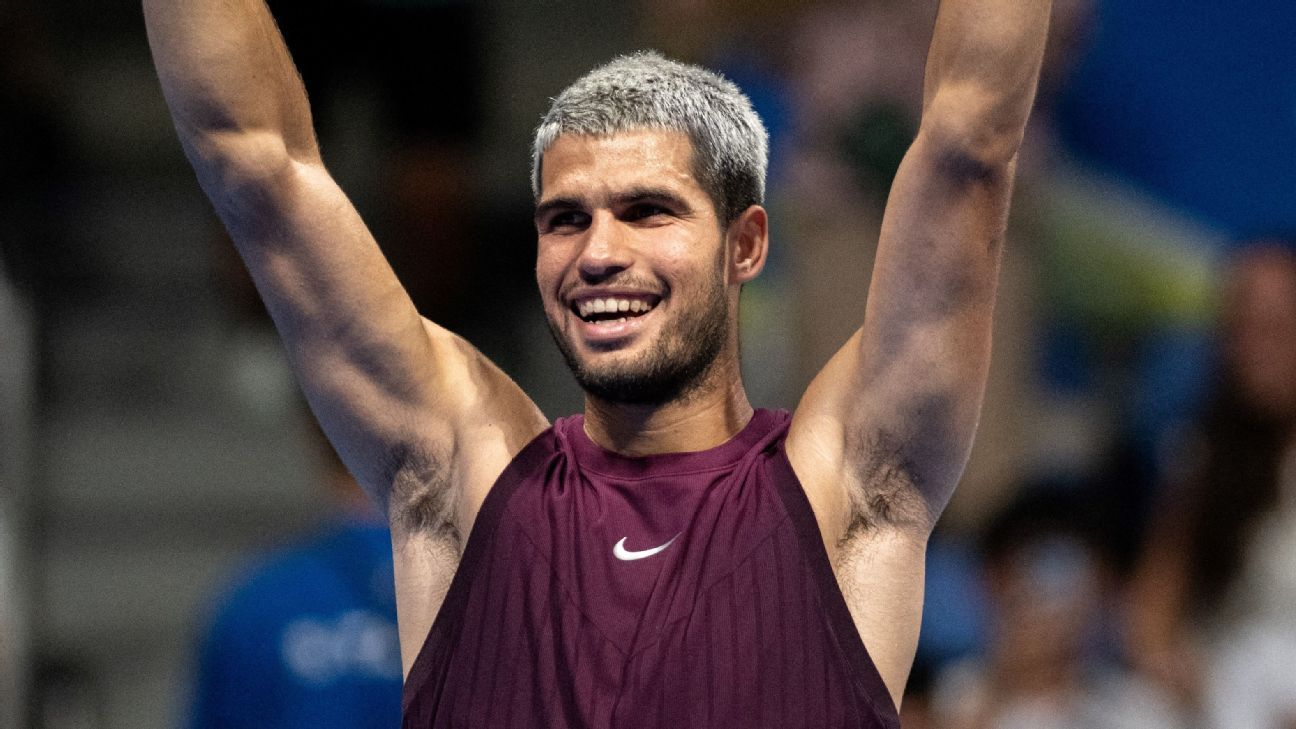
In the electric hum of Rod Laver Arena during the Australian Open’s opening weekend, the One Point Slam emerges as a radical distillation of the sport, where every contest hinges on a single, high-pressure exchange. Carlos Alcaraz anchors the professional lineup, joined by 21 other elite players facing off against 10 club-level amateurs drawn from across Australia. Organisers announced the initiative on Tuesday, revealing a structure that begins with rock-paper-scissors to determine the server, then unleashes that one decisive point on the unforgiving plexicushion surface.
Amateurs navigate sudden spotlight
For the selected amateurs, entries opening soon at local clubs lead to Opening Week qualifiers, where survivors earn a shot at glory against the pros. These underdogs must summon tactical poise in an instant—perhaps opting for a deep crosscourt return to counter Alcaraz’s explosive serve, or using underspin to disrupt his rhythm on the medium-paced hard court. The crowd’s rising anticipation, from shadowed stands to sun-baked baselines, turns each footstep into a shared pulse, amplifying the psychological weight of a moment that could eclipse years of casual play.
The million-dollar prize, surpassing main-draw semifinal earnings, dangles as both lure and burden, testing resolve in ways that echo the mental fortitude required for longer battles. Yet for these entrants, unscarred by tour pressures, the format invites bold risks, like a surprise down-the-line approach that might catch a pro flat-footed.
“I can reveal today that World No.1 Carlos Alcaraz will headline the pro player line-up in the Million Dollar 1 Point Slam -- a thrilling new initiative where one point could win you $1 million,” Australian Open tournament director Craig Tiley said. “Whether you’re an amateur or a pro, the ultimate winner will walk away with the prize. Entries will open soon at clubs across the country, and during Opening Week, finalists will compete for a chance to face the pros on Rod Laver Arena. ”With more big names to be announced soon, you now have a million reasons to pick up a racquet and get ready for January.“
Pros sharpen for split-second demands
Alcaraz and his fellow professionals arrive fresh from offseason tweaks, now compelled to compress their arsenal into one telling sequence—maybe a wide slice serve setting up an inside-in forehand winner, exploiting the surface’s consistent bounce to punish any amateur hesitation. This micro-format mirrors the U.S. Open’s mixed doubles expansion in its bid to attract new fans, but here it forces pros to confront season-opening nerves without the buffer of extended rallies. The arena’s atmosphere, thick with early-tournament buzz, heightens every calculation, from footwork adjustments to reading an opponent’s grip under the lights.
With the prize injecting real stakes, players like him must balance exhibition flair and competitive edge, their one-two combinations distilled to essence amid the hard court’s subtle grip. Tiley’s vision positions the event as a gateway, yet it subtly preps the pros for the main draw’s tactical marathons, where similar snap decisions underpin five-set endurance.
Format ignites season’s opening fire
As more star names join the roster, the One Point Slam weaves unpredictability into the Australian Open’s narrative, blending amateur audacity with professional precision on a stage that hums with potential upsets. The plexicushion’s tempo favors neither side outright, allowing a well-timed lob or steady return to level the odds in that solitary point. Beyond the spectacle, it underscores tennis’s psychological layers, propelling participants—and spectators—toward a year defined by those fleeting moments of brilliance that build legacies on the global circuit.