Alcaraz Ends Seven-Year Run with Ferrero

Carlos Alcaraz closes a pivotal chapter with coach Juan Carlos Ferrero, the partnership that forged six Grand Slams now yielding to fresh ambitions after a grueling 2025.
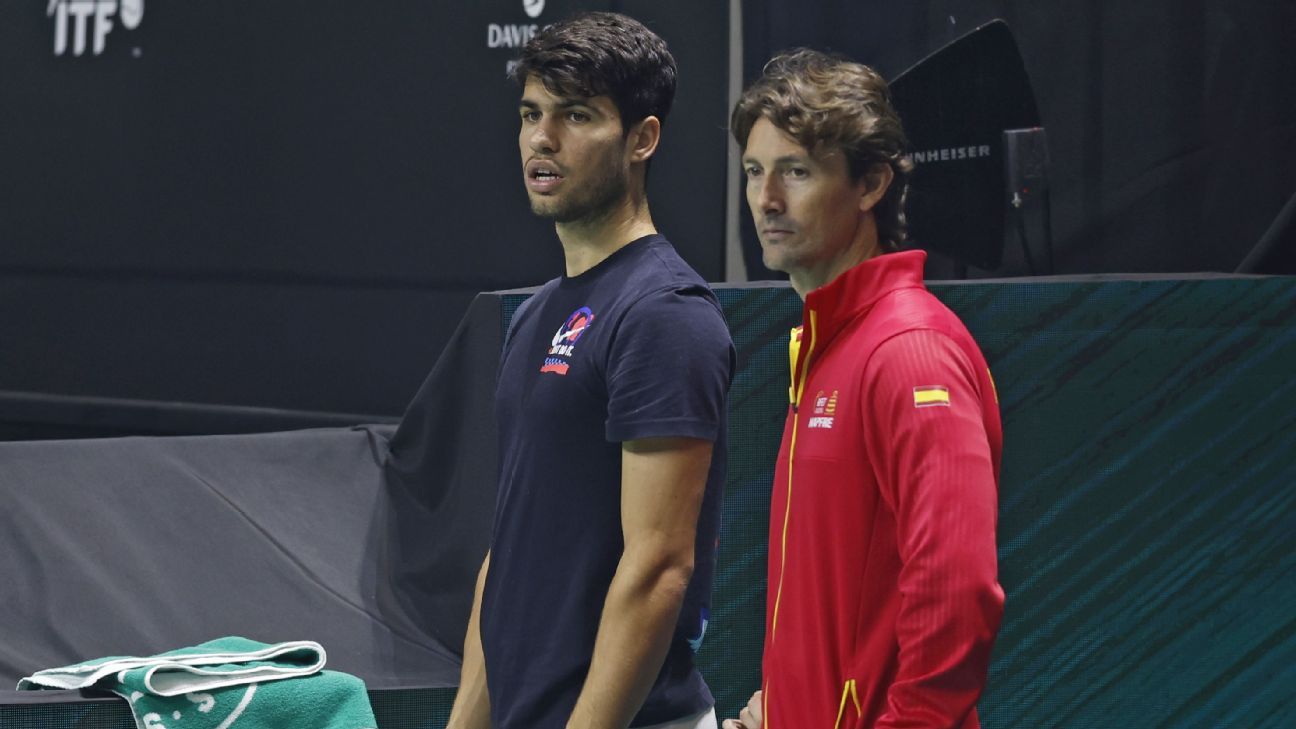
In the off-season hush following a year of relentless triumphs, Carlos Alcaraz steps away from the coach who shaped his ascent to the top. The 22-year-old world No. 1 announced on social media the end of his seven-year collaboration with Juan Carlos Ferrero, a bond that delivered six Grand Slam titles across clay, grass, and hard courts. This split, revealed on December 17, 2025, arrives amid whispers of burnout and evolution, as Alcaraz reflects on a journey from teenage prodigy to dominant force.
Alcaraz’s words capture the raw emotion of parting, posted alongside a photo that evokes their shared path. Ferrero, a former No. 1 and French Open champion, joined him at 15, guiding the Spaniard to 24 tour-level titles, including eight Masters 1000s, and a career-high 71 match wins this season alone.
“After more than seven years together, Juanki and I have decided to bring our chapter together as coach and player to an end,” Alcaraz wrote. “Thank you for turning childhood dreams into reality. We started this journey when I was barely a kid, and throughout all this time you’ve accompanied me on an incredible journey, on and off the court. And I’ve enjoyed every step of it so much with you.”
Es muy difícil para mí escribir este post... Tras más de siete años juntos, Juanki y yo hemos decidido poner fin a nuestra etapa juntos como entrenador y jugador.
Gracias por haber hecho de sueños de niño, realidades. Empezamos este camino cuando apenas era un chaval, y durante... pic.twitter.com/D4GSxYsZUY— Carlos Alcaraz (@carlosalcaraz) December 17, 2025
A foundation built on early promise
Ferrero spotted Alcaraz’s potential early, molding a raw athlete into a versatile competitor who claimed his first major at the 2022 US Open, becoming the youngest No. 1 at 19. Their work emphasized tactical depth, like the 1–2 pattern on faster surfaces: a slicing serve wide followed by an inside-in forehand that yanked returners off balance. On Wimbledon’s grass, where Alcaraz lifted two crowns, this approach disrupted service games, turning defensive scrambles into crosscourt winners that echoed through packed stands.
Their synergy shone in extended rallies too, with Ferrero teaching Alcaraz to loop heavy topspin on clay, pinning opponents deep at Roland Garros before unleashing down-the-line backhands. This blend of power and precision secured two French Open titles, as Alcaraz absorbed pace and countered with underspin slices that skimmed the net low. Off court, Ferrero built mental resilience, helping the young Spaniard weather the pressure of five-set marathons, where crowd roars amplified every point’s weight.
Yet as victories mounted—eight titles this season, leading the tour—the dynamic shifted. Alcaraz’s growing confidence tested their roles, with decisions in high-stakes Masters 1000 finals demanding quicker adaptations, like varying serve angles against left-handed foes to expose backhand weaknesses.
Pressures of dominance take hold
This year’s calendar tested limits, from clay-court grinds to hard-court sprints, leaving little room for recovery amid Alcaraz’s 71 wins. Ferrero, alongside Samuel Lopez who joined in 2025, earned ATP Coach of the Year honors, as they had in 2022, but the accolade masked accumulating strain. Alcaraz refined his game under duress, employing one–two combinations on hard courts to seize control early, following flat serves with deep returns that forced errors in tiebreaks.
At Flushing Meadows, where two US Open triumphs came, their strategy focused on footwork and recovery, using slice backhands to neutralize big servers and extend points into crosscourt exchanges. The mental toll surfaced in quieter moments, as the top ranking’s demands—scouting rivals’ patterns, adjusting to surface speeds—wore on both. Ferrero’s guidance remained steady, yet Alcaraz’s maturity hinted at a need for new perspectives to sustain his edge.
“Today is a difficult day. One of those when it’s hard to find the right words. Saying goodbye is never easy, especially when there are so many shared experiences behind it.”
Ferrero shared his statement on social media, expressing a wish to continue while affirming their lasting connection. He noted good memories would reunite them, a sentiment that underscores the mutual respect defining their run.
Pathways open to new evolutions
As Alcaraz eyes 2026, the split empowers a champion ready to integrate fresh tactics without the familiar cadence of Ferrero’s voice. His arsenal—inside-out forehands on grass, topspin loops on clay—carries forward, poised for refinements against emerging threats like flat-hitting baselines. The off-season offers recalibration, blending physical reset with psychological recharge to tackle the tour’s unforgiving cycle.
Ferrero’s legacy endures in every instinctive 1–2 punch or down-the-line pass that breaks defenses, etched from boyhood drills to major finals. Alcaraz closes with gratitude, wishing his mentor well and comforted by their all-in effort. In tennis’s rhythm of change, this pivot fuels anticipation, as the No. 1 forges ahead with renewed fire amid the global circuit’s roar.
“I sincerely wish you all the best in everything that comes your way,” Alcaraz added. “I’m comforted by the knowledge that we gave our all, that we offered everything to each other. Thank you for everything, Juanki!”