Agassi Unpacks Federer and Hewitt’s Elusive Edges

Fresh from an exhibition at the Australian Open, Andre Agassi breaks down the unique gifts that made Roger Federer and Lleyton Hewitt nightmares for rivals—defense flipped to attack, time stretched to infinity.
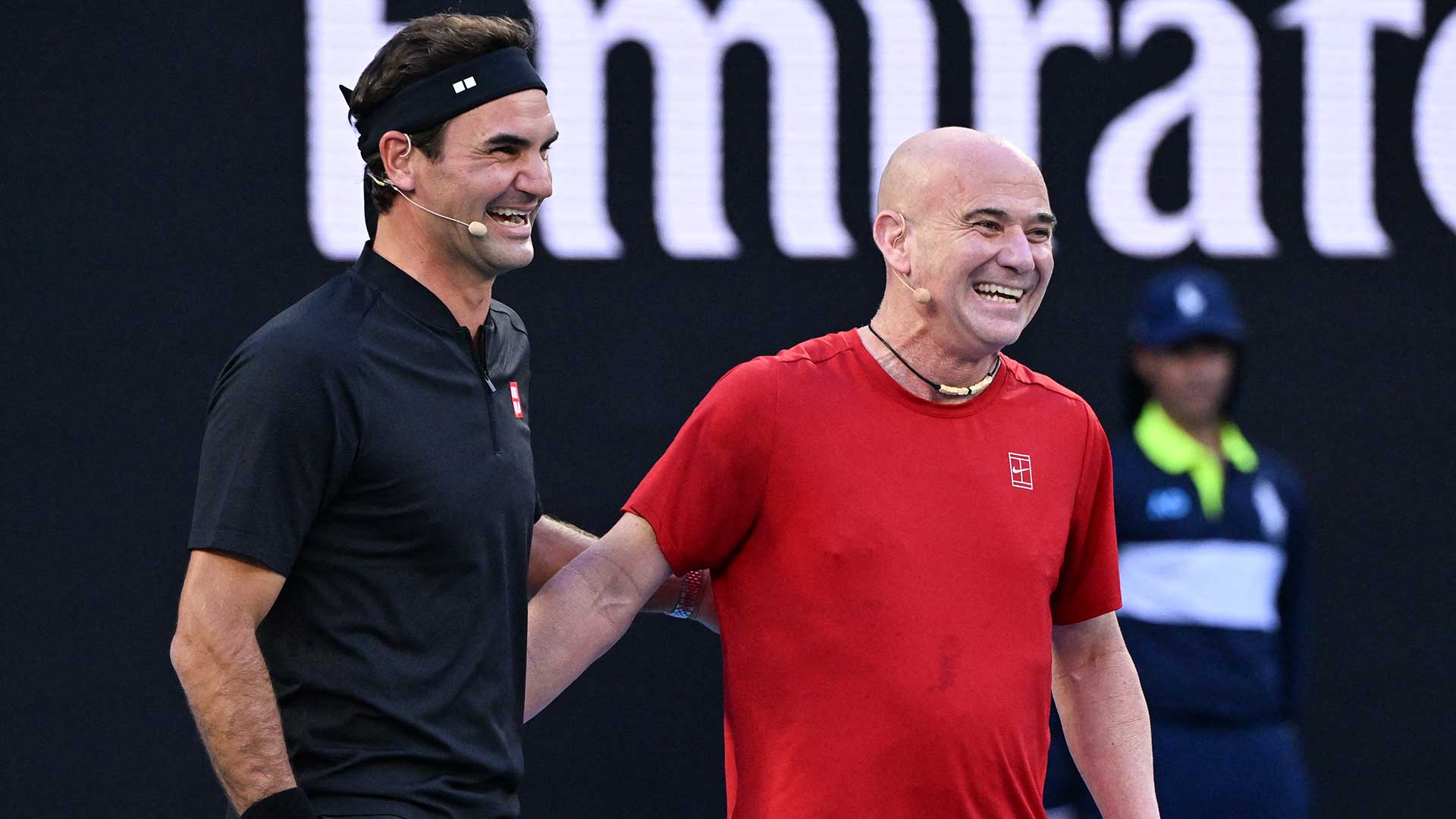
The Melbourne evening pulsed with the crack of racquets and scattered applause as the exhibition doubles wrapped on Saturday at the Australian Open. Andre Agassi, sweat still beading on his brow, stepped off court after trading groundstrokes with Roger Federer, Lleyton Hewitt, and Patrick Rafter. In a quick huddle with Jim Courier, he unpacked the qualities that turned these fellow No. 1s into such relentless forces during their peak years.
“Every No. 1 player in the world brings something so unique to the game,” Agassi said, nodding toward Hewitt. “I watched Lleyton do it. He turned a transition game phenomenally. He turned defence into offense. We saw fast players that stayed on defence.”
Hewitt flips defense into sharp attacks
Agassi and Hewitt split their head-to-head at 4–4, every encounter grinding out on hard courts where the ball’s low skid tested footwork and nerve. Hewitt’s 80 weeks at No. 1, wrapping up in June 2003, leaned on that ability to snatch control from deep positions, absorbing heavy topspin returns and firing back crosscourt with pace. In those rallies, his inside-out forehands stretched opponents wide, forcing rushed volleys that he pounced on at net, echoing the crowd’s rising energy during the exhibition.
That transition edge wore down foes over long points, much like the tour’s hard-court swings demanded constant adaptation from Melbourne’s bounce to New York’s speed. Agassi recalled how Hewitt’s retrieval kept him pinned, turning potential breaks into defensive scrambles and building pressure point by point. The Australian’s baseline hustle not only balanced their rivalry but reshaped how players approached the surface’s unforgiving tempo.
Federer bends time on every shot
Agassi’s voice softened when turning to Federer, against whom he held a 3–8 record that captured the Swiss’s command on those same hard courts. Federer’s record 310 weeks at No. 1, including 237 straight, flowed from a game that made seconds feel endless—he’d redirect an inside-in forehand down-the-line or slice a backhand to pull you east-west across the baseline. In their matches, Agassi’s clean strikes landed just as planned, yet Federer arrived with room to vary spin or angle, leaving returners frozen mid-commitment.
“Then all of a sudden you play this guy Roger Federer and it was like time stood still,” Agassi said. “You hit the ball and it leaves your racquet exactly how you want it, yet he has all the time in the world. You couldn’t commit because he could change pace or direction. He could move you north and south, east and west. I knew I was facing the efforts of the next generation.”
Agassi’s own 101 weeks atop the rankings gave him insight into that illusion, where Federer’s one–two patterns—serve carving wide, followed by a topspin approach—disrupted rhythms built over seasons of hard-court battles. The exhibition glimpses of Federer’s net poise drew murmurs from spectators, a nod to how his adjustments kept the pressure mounting without a hint of strain. As the Australian Open 2026 heats up, these reflections remind current contenders that mastering hard courts means outthinking the clock itself.
No. 1 lessons echo in Melbourne
The chat lingered in the humid air, bridging Agassi’s era to today’s grind, where players chase rankings amid similar exhibition warmth and main-draw intensity. Hewitt’s defensive flips and Federer’s temporal tricks highlight the mental pivots that sustain dominance, from early-year heat to late-season pushes. With the tournament unfolding, Agassi’s breakdown offers a blueprint for turning court time into lasting legacy.