Brooksby channels Tokyo fire into Shanghai dominance

Emerging from a two-year wilderness, Jenson Brooksby turns the page with a ruthless first-round rout, his game humming with the promise of unfinished business on Asia’s hard courts.
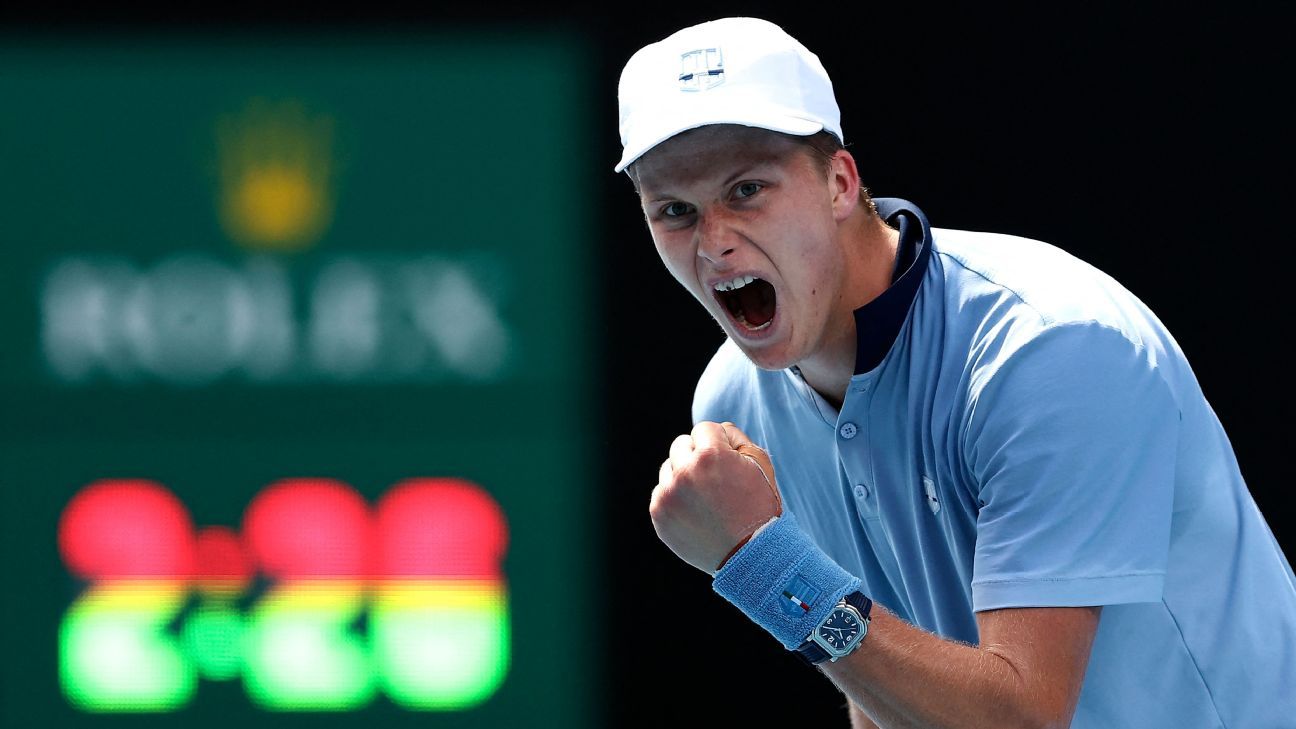
Under the humid haze of Shanghai’s Qizhong Forest Sports City, Jenson Brooksby dismantled James Trotter in the first round of the Masters, firing a 7-6 (2), 6-1 statement that echoed his Tokyo semifinal surge just days earlier. The American’s returns sliced through the night air like reclaimed territory, each point a reclamation from the injuries and suspension that had exiled him for two years. This victory, crisp and unyielding, carried the quiet thunder of a player syncing with the tour’s rhythm once more, his baseline exchanges pulsing with the intensity of hard-won momentum.
Redemption rises from Tokyo’s embers
Brooksby’s path back ignited at this year’s Australian Open, where tentative steps on hard courts rebuilt what the hiatus had eroded. In Tokyo, he pressed fellow American and second-seeded Taylor Fritz to the semis’ edge before a narrow defeat, a clash that sharpened his resolve amid the Japan Open’s electric close. Now, that fire fuels Shanghai’s faster surface, where his deep crosscourt forehands pinned Trotter deep, transforming the qualifier’s early aggression into unraveling errors. The crowd’s rising hum mirrored his inner shift, every hold a psychological anchor against the doubts of absence.
As the first set knotted toward a tiebreak, Brooksby absorbed volleys with poised footwork, countering via inside-out backhands that stretched the court wide. Trotter‘s flat strikes tested him, but the American varied depths, slipping underspin slices to disrupt footing and seize control. This mental fortitude, forged in isolation, turned potential pressure into propulsion, his eyes locked on the horizon of a season still unfolding.
Tactics adapt to Shanghai’s swift bounce
With top seeds enjoying first-round byes, the early draw hummed with undercard intensity, Brooksby navigating it via one–two combinations that blended serve power with forehand angles. Jannik Sinner, who won the China Open final in Beijing on Wednesday, and Novak Djokovic wait until Friday for their openers, their absences opening lanes for resurgents like the American. He exploited the grippier hard courts here, favoring down-the-line returns over Trotter’s looser spins, his anticipation turning defense into decisive breaks. The second set dissolved into dominance, footwork syncing with the ball’s quicker skid to force unforced faults on inside-in attempts.
Carlos Alcaraz, who beat Fritz for the Japan Open title before skipping Shanghai, leaves a void that rewards such adaptability, yet Brooksby’s composure under the arc lights betrayed no fracture from the Tokyo high. The atmosphere thickened with tentative cheers for the younger player’s holds, but his surge silenced them, each rally a tactical pivot toward ranking ascent. Psychologically, this matchup rebuilt eroded edges, positioning him amid a field where precision meets endurance.
Momentum points toward deeper runs
As elite second-round battles loom, Brooksby’s opener injects fresh intrigue into Shanghai’s champion-laden bracket, his game a blend of Tokyo’s grit and this venue’s speed. The 24-year-old stands at a crossroads, every victory weaving resilience into relevance on the ATP ladder. In this cauldron of hard-court demands, his quiet ascendance hints at upsets waiting, the tour’s relentless grind now an ally in his resurgence.